Resources
-

An introduction to family law in Ontario
This resource lists the main issues that couples must deal with when their relationship ends. It also explains how they can resolve them - through an agreement, alternative dispute resolution process, or family court.
-

Appealing a decision about social assistance
This resource describes the steps someone can take if they disagree with a decision about social assistance from Ontario Works or the Ontario Disability Support Program. This includes decisions to refuse, reduce, or cut off assistance. People may be able to appeal to the Social Benefits Tribunal. But first they have to ask for a review of the decision by the office that made it.
-

Ask to have your court matter in French
This letter writing tool creates a letter that asks for your court proceeding with a judge to be in French.
-

Asking for a Record of Employment (ROE)
This letter writing tool can be used by an employee to write a letter to their employer asking for their Record of Employment (ROE).
-

Asking to assign
This letter writing tool can be used by a tenant to write a letter to their landlord asking to assign their rental unit.
-

Asking to sublet
This letter writing tool can be used by a tenant to write a letter to their landlord asking to sublet their rental unit.
-

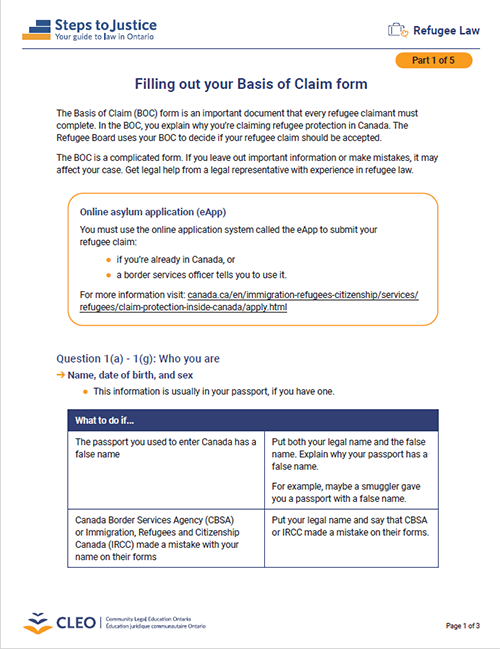
Basis of Claim (BOC) tip sheets
This resource explains how to fill out Basis of Claim forms.
-

Being evicted for renovations
There are rules your landlord must follow if they want to evict you to do renovations or repairs. This resource describes those rules, how you can fight the eviction, and the right to move back in after the renovations are complete. There are rules landlords must follow if they want to evict tenants to do renovations or repairs. This resource describes those rules, how tenants can fight the eviction, and the right to move back in after the renovations are complete.
-

Bill of Rights for home and community care
Ontario's Patient Bill of Rights lists the rights people have when they get home and community care services that the government pays for. This resource explains each right and describes these services.
-

Buying or leasing a used car from a used car dealer
This resource explains your rights when you buy or lease a used motor vehicle from a registered dealer. It tells you what information the dealer must give you, what must be in the written contract, and what you can do if a dealer breaks these rules or acts unfairly.
-

Can I get ODSP if I get an inheritance?
This resource deals with how inheriting money or other property can affect a person’s right to benefits from the Ontario Disability Support Program. It mentions the rules about assets, income, and payments for disability-related items and services.
-

Can I work and get ODSP?
This resource explains how income from work or training can affect the amount of income support a person gets from the Ontario Disability Support Program (ODSP).
-

Can I work and get Ontario Works?
This resource explains how income from work or training can affect the amount of income support a person gets from Ontario Works (OW).
-

Can your landlord take your stuff?
This resource explains what landlords must do with any personal property tenants leave behind when they move, are evicted, or die.
-

Canada Pension Plan disability benefits
This resource explains the Canada Pension Plan (CPP) disability benefits for workers who can no longer work because of a physical or mental disability. Topics include who can get this benefit, how to apply, other available benefits, and what to do if refused.
-

Care homes
A care home is a rented home that provides health care services, attendant care services, or help with daily living. This resource explains how to tell if someone is a care home tenant and describes the rights of care home tenants. It covers topics such as information packages, tenancy agreements, rent, services, and evictions.
-

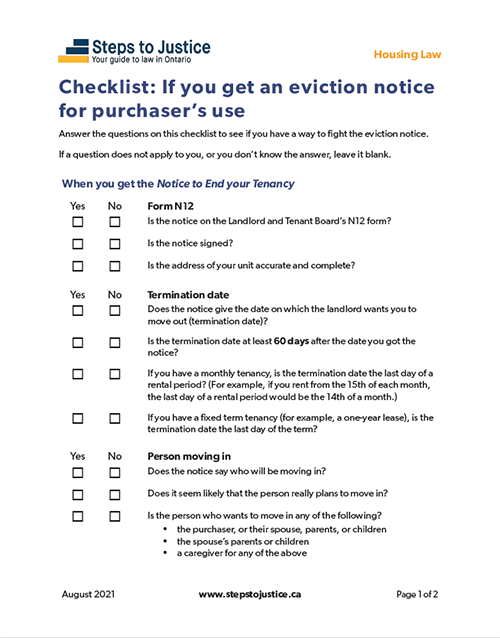
Checklist: N12 notice for purchaser’s use
This resource can be used by a tenant to see if they can fight the eviction.
-

Child protection flowcharts
These are a set of 3 flowcharts that explain the child protection process. Click on each box in the flowchart to learn more.
-

Child support
This resource explains who is legally responsible to pay child support, how it is calculated, and how it is enforced.
-

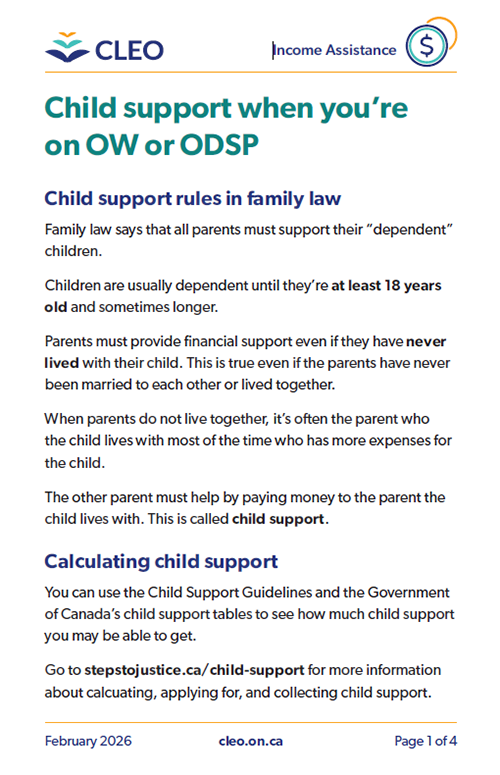
Child support when you’re on OW or ODSP
This resource explains the rules about child support when someone is getting assistance from Ontario Works or the Ontario Disability Support Program.