

Resources
-

Making a claim
This resource explains what workers should do if they have an injury or disease related to their job. It describes how to apply to the Workplace Safety and Insurance Board for benefits, and what the Board does when it gets an injury report. It covers what employers must do and where to get legal help.
-

Making a complaint to the Ontario Ombudsman
This resource explains how to make a complaint to the Ontario Ombudsman’s Office. It describes what you can complain about, the process, and what can happen after you make a complaint.
-

Making a humanitarian and compassionate (H&C) application
This resource is for front-line workers supporting women who experienced family violence and lack permanent resident status. It explains what a humanitarian and compassionate (H&C) application is, what evidence can support an application, and where to refer a woman for legal help.
-

Making decisions and spending time with children
This resource discusses when a partner may have a right to spousal support and what determines how much they get and for how long.
-

Motor vehicle repairs
This resource explains your legal rights when you get repairs or work done on your motor vehicle in Ontario. It includes information on estimates, warranties, and what you can do if you are not satisfied.
-
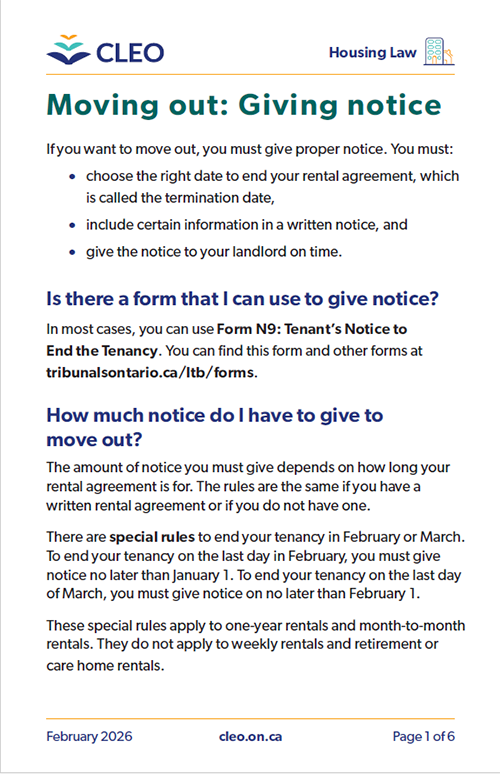
Moving out: Giving notice
This resource explains how much notice tenants must give their landlords to move out. It also explains the rules tenants must follow to give notice and what happens if tenants do not give the right notice.
-

Moving out: Subletting and assigning
This resource describes how to assign or sublet a rental unit. It also explains the rules tenants and landlords must follow, and what tenants can do if their landlord refuses to let them assign or sublet.
-

My Safety Plan
This online resource helps people in abusive relationships create a safety plan to keep themselves and their children safe. The plan has space for people to fill in information that applies to them and "to do" lists to help them stay safe at home, at work, in public, and online. It also includes organizations they can contact for help, and a checklist of things to keep in an emergency bag if they need to leave their home quickly.
-

Need welfare? How to apply to Ontario Works
This resource is about how to apply to Ontario Works for financial assistance. It explains the rights of people applying for assistance, what kind of questions Ontario Works can ask, and what documents people might need to show. It includes information about the forms that have to be filled out and where to get help if there is a problem with Ontario Works or if they refuse assistance.
-

Online, telephone, and mail-order shopping
There are several ways to shop without going to a store or having a salesperson come to your home. The most common of these are online, telephone, and mail-order shopping. This resource explains your legal rights when you shop by internet, phone, or mail, and how you can enforce those rights.
-

Payday loans
This resource explains the legal rights of people who borrow money from a payday loan company, including limits on fees and interest, information that the lender must provide, and when the borrower can cancel the loan. It also suggests places to get help if the lender does not follow the law.
-

Paying rent
This resource explains the fees and deposits landlords can charge tenants. It also explains why rent receipts are important and the information landlords must include in them.
-

Police Powers: Stops and Searches
This resource sets out the rights of a person who is stopped, questioned, searched, arrested, or detained by the police. It also explains when the police can enter or search someone's home.
-

Power of Attorney for Personal Care
This resource explains what a Power of Attorney for Personal Care is, reasons to make one, and what can happen if you do not. Topics include how to make a Power of Attorney for Personal Care, when an attorney can make decisions, the types of decisions they can make, and where to get forms, legal information, and help.
-

Preparing your Continuing Power of Attorney of Property
This tip sheet helps you gather the information you need to make a Continuing Power of Attorney for Property.
-

Preparing your Power of Attorney for Personal Care
This tip sheet helps you gather the information you need to make a Power of Attorney for Personal Care.
-

Preparing your will
This tip sheet helps you gather the information you need to make a will.
-

-
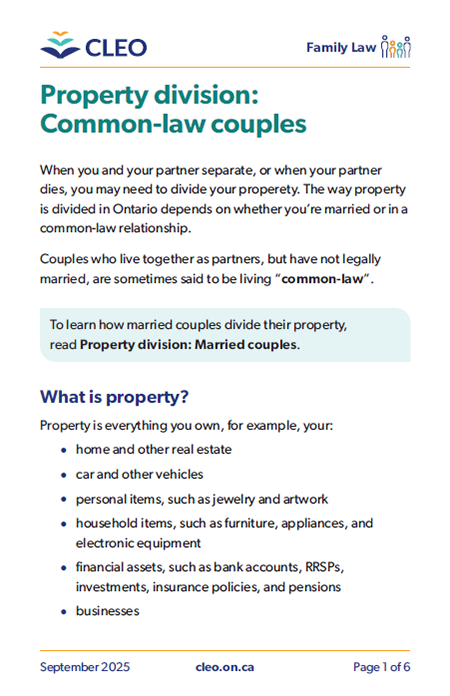
Property division: Common-law couples
This resource explains how property is divided when a common-law couple separates, or when one partner dies.
-

Property division: Married couples
This resource explains how property is divided when a married couple separates or divorces, or when one spouse dies.